

A few days ago, we brought the entire WATA Factory team together at the office to share the company’s strategic plan for the next two years. A large part of the conversation revolved around how the industry is changing and around something that, whether we like it or not, is already beginning to directly affect the way we work: artificial intelligence.
We have been carrying out internal tests with different AI tools for some time, exploring possibilities and looking in practical terms at where they truly add value. However, the current market context is making one thing clear: it is no longer just about automating individual tasks or running small, isolated tests. We are seeing changes in much deeper areas: how tasks are defined, how projects are documented, how developments are validated or even how work is organised between different profiles.
For this reason, we wanted to share this vision with the whole team. Not as a theoretical presentation about the future, but as a real conversation about where we believe the industry is heading and how we want to adapt to that change at WATA Factory.
From infrastructure to AI: how our way of working is changing
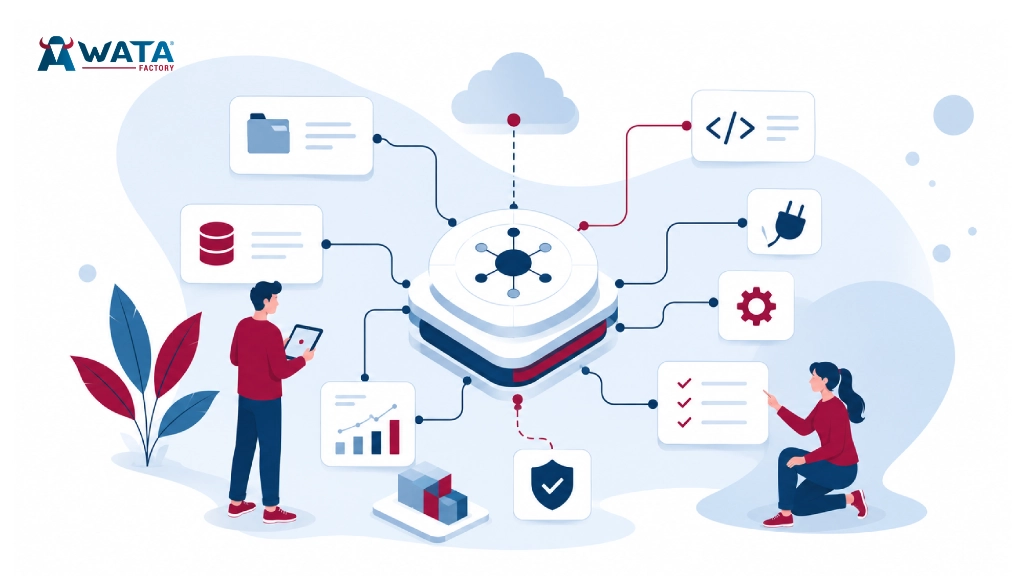
The reality is that this movement is not starting now. Over the past few years, we had already been working on important internal changes, especially related to infrastructure, automation and scalability through technologies such as Kubernetes. That is why it now makes sense to start integrating AI beyond isolated tests and begin bringing it into the real day-to-day work of our projects.
What is interesting is that this change does not only affect development. It also changes how tasks are structured, how requirements are validated, how test suites are generated or how work is organised between areas. Many phases that used to be completely separate are now beginning to coexist in a much more connected way.
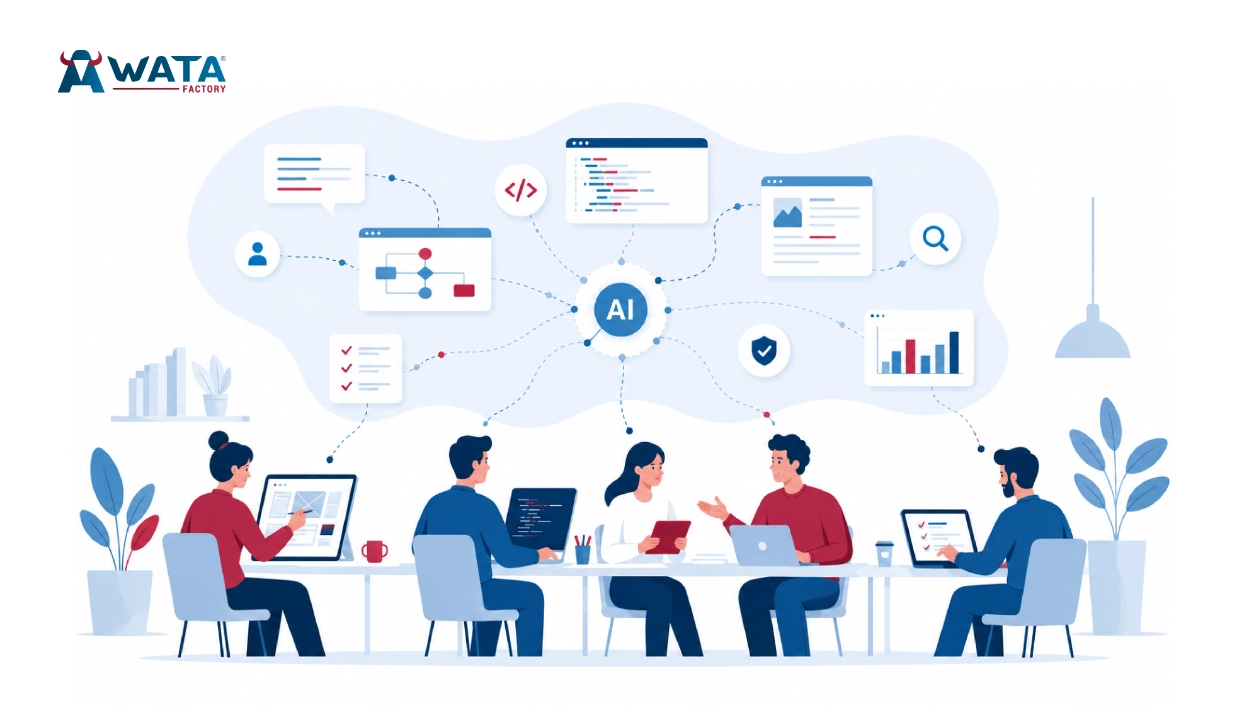
During the meeting, we explored this idea in greater depth: a less linear and much more connected working model, where product design, functional validation, AI-assisted development and technical review no longer operate as separate phases, but begin to form part of the same, much more continuous workflow.
Roles also need to adapt
Another important part of the meeting was explaining how the working structure within WATA Factory will evolve over the coming years. Because the change is not only in the tools we use, but also in how projects are organised, how teams collaborate and what responsibilities each profile will have within the process.
Within the new model we are going to start implementing, roles such as AI Software Architect will appear, focused on defining architectures prepared to work alongside AI from the very beginning of the project. This role will be much more closely linked to preparing context, establishing technical standards, defining scalable structures and ensuring that the entire flow is coherent from both a technical and business perspective.
The development profile is also evolving towards an AI Software Engineer model, where the work will not only consist of manually developing features, but also of supervising, adapting, reviewing and validating what is generated through AI-assisted workflows.
Other profiles are also changing significantly. Roles more closely linked to management and quality are starting to incorporate automated validation and AI-assisted testing into their daily work, while areas such as product design are gaining even more weight within the process.
When working with AI, properly defining the context stops being simply a preliminary phase and becomes a critical part of development. The better a product is structured from the beginning — flows, requirements, validations or tasks — the better all the tools and processes around it will work later on.
Technology, innovation and people: the real challenge of change
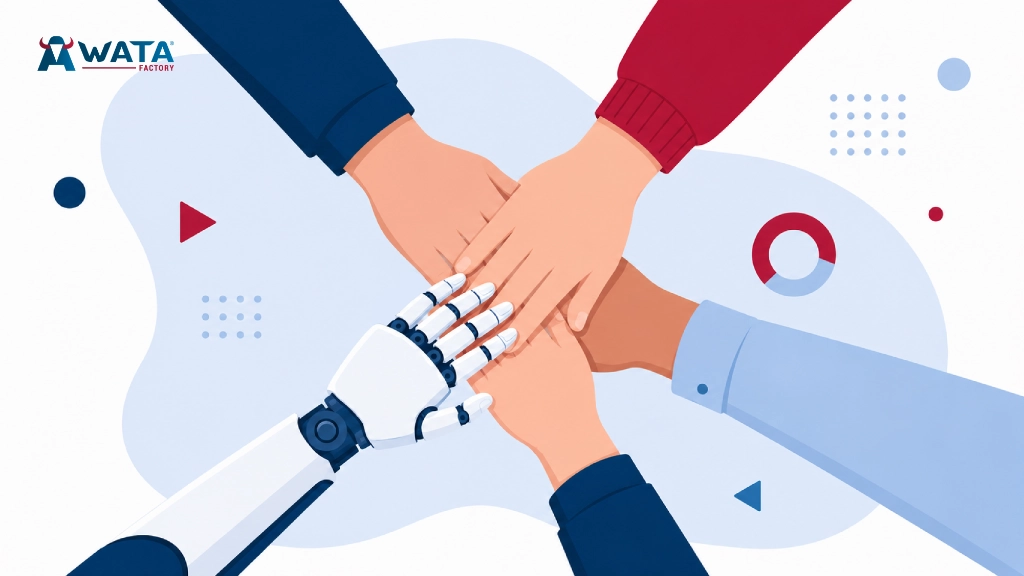
We also made an important idea clear during the meeting: this change does not reduce the value of people within teams. In fact, quite the opposite is true.
The more weight AI gains within processes, the more important judgement, experience and the ability to make decisions with context become. Tools can speed up many parts of the work, but they still need direction, validation and people capable of understanding what makes sense to build and what does not.
And that is probably where one of the biggest upcoming changes lies: it is no longer just about executing tasks, but about contributing vision, structuring information better, validating with judgement and working in a much more connected way across areas.
Right now, we are still in a phase of exploration and validation. We are testing tools, adjusting processes and seeing what truly fits into our day-to-day work, and what still needs to mature. But if there is one thing we are clear about, it is that the technology industry is already entering a new stage and we want WATA Factory to be an active part of it.
We are not approaching this transition from a place of fear or replacement, but from one of evolution. From understanding how to make the most of everything these new technologies bring in order to build better products, work more efficiently and continue growing as a team.
Beyond concepts such as AI-first, automation or innovation, what truly continues to make the difference is the people behind them: how they collaborate with one another and their ability to adapt to an environment that is changing faster and faster.