

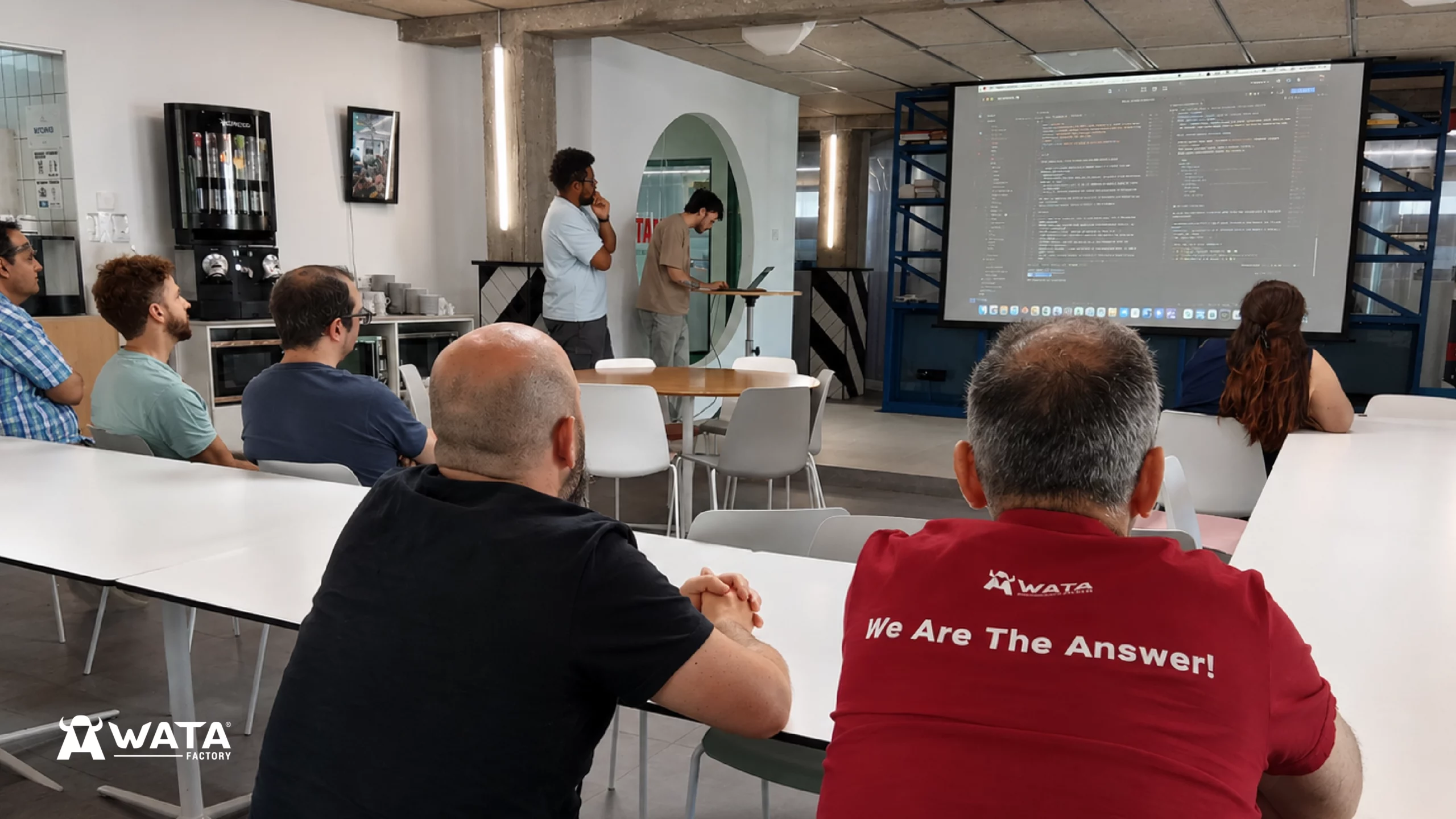
A few days ago, we held a new edition of Iberica Labs at WATA Factory, a day on which we once again deliberately set aside time for something that is often difficult to find in everyday work: learning, researching and sharing knowledge across teams.
This time, the content of the day also served to connect two stages we have been working on over recent months. On the one hand, we brought to a close the journey we had undertaken around Kubernetes, Grafana and system monitoring. On the other, we explored in greater depth a topic that has been part of our daily work for some time and will continue to gain importance in the coming years: how to adapt projects and teams to an increasingly AI-assisted way of working.
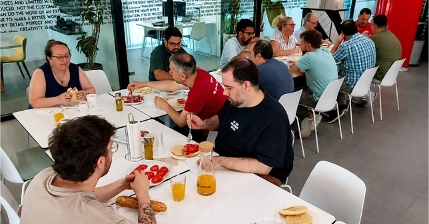
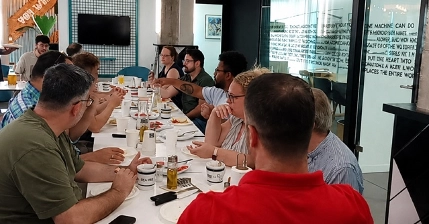
As has become tradition, the day began with an Andalusian breakfast for the whole team before the different sessions got under way.
Outlook for the second half of the year
Before diving into the content, Germán T. presented the main objectives and priorities for the second half of the year to the team.
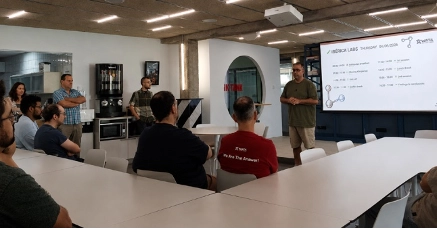
The session provided a framework for putting many of the topics that would come up later in the day into context, and for sharing the company’s vision of how we can continue to evolve in a market where technology, processes and customer needs are changing ever more rapidly.
It was also an opportunity to reinforce an idea that has been part of WATA Factory’s philosophy from the very beginning: to keep evolving continuously, to keep learning and to adapt to changes in the industry without losing sight of our focus on creating real value for clients and projects.
Concluding our work with Kubernetes and Grafana
The first technical session was dedicated to concluding all the work we have been carrying out over recent months around Kubernetes and Grafana — two technologies that have already been at the centre of several previous editions of Ibérica Labs.
During this time, we have explored monitoring, metrics analysis and the organisation of environments prepared for scaling in depth — always with the aim of gaining greater visibility into what is happening within applications and infrastructures.
Beyond the technical level, however, one of the most interesting insights from this stage was that many of the challenges that arise when managing complex infrastructures are now reappearing in the field of AI. If Kubernetes taught us to work on scalability, control and organisation, artificial intelligence brings with it similar challenges in relation to knowledge, documentation and processes.
How we are aligning our projects with AI
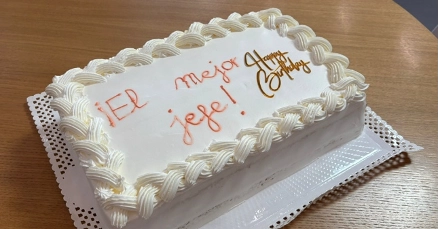
After a coffee break with cake, it was time to introduce the central topic of this edition.
Artificial intelligence has been part of numerous tools and processes within the technology sector for some time now. In this session, however, the focus was not on the tools themselves, but on a much more relevant question: what does a project need in order to truly make use of its potential?
From there, we analysed how elements that, until recently, often remained more in the background are beginning to gain importance: documentation, functional context, validations, decision traceability and the way in which we share knowledge within teams.
We also explored different structures and mechanisms that are gradually emerging in projects to help people and AI-assisted systems work in a much more aligned way — while always keeping control, context and human judgement as part of the process.
Room for experimentation
Following the presentation, the more practical part of the day began.
Each team worked independently to investigate different approaches, test some of the ideas shared during the morning and explore new ways of structuring documentation, context and processes within AI-assisted projects.
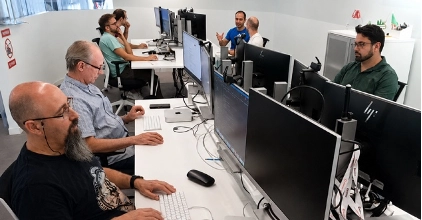
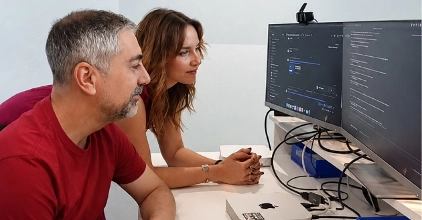
The aim was not to end the day with definitive answers or finalised processes. Part of the value of Ibérica Labs lies precisely in being able to experiment, compare approaches and validate ideas in an environment where learning carries more weight than immediate conclusions.
Insights, challenges and next steps
After the shared meal, it was time to share the results.
Each team presented its insights to the others, along with the challenges identified during the sessions and the areas of work they considered most interesting to continue exploring.
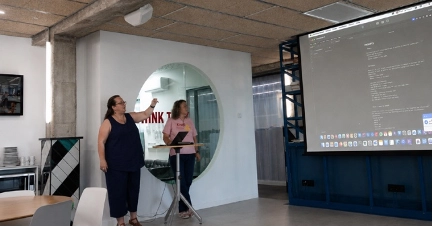
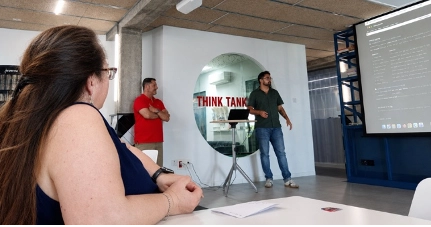
This edition of Ibérica Labs helped to consolidate the learnings from recent months while also opening up new areas of work around artificial intelligence, context management and the evolution of development processes.
It is a path we will continue to explore over the coming months and one that will undoubtedly once again form part of future editions of Ibérica Labs.
See you at the next All Hands in September.