

At WATA Factory, we usually rely on MySQL and PostgreSQL for our web projects and mobile applications with a web backend. However, we were recently introduced to Apache CouchDB — and we have to say, it turned out to be a more than interesting option. That’s why we decided to share our thoughts in this post.
What is CouchDB?
Broadly speaking, CouchDB is an open-source, document-oriented NoSQL database management system designed to be distributed and fault-tolerant. Information is stored as JSON documents, each with its own independent schema and data.
And yes, you might be thinking: “Here comes another MongoDB reinventing the wheel.”
Compared to MongoDB and other document databases, CouchDB can stand out in read operations under certain conditions. However, it is true that it typically consumes more RAM and CPU resources when handling large volumes of data or write-intensive workloads.
MongoDB is often faster and more efficient for insert-heavy and high-processing operations, whereas CouchDB performs particularly well when queries leverage MapReduce functions or distributed replication. And that is precisely where we would like to focus.
What caught our attention?
Of all the features it offers, the ones that stood out the most to us were its architecture and its interface.
Its architecture is specifically designed to facilitate replication and synchronization — even with devices that may operate offline and automatically sync once connectivity is restored. This aspect is especially relevant when considering mobile application use cases.
A mobile application would use a lightweight version of CouchDB (such as PouchDB in JavaScript or Couchbase Lite for native platforms) to store data locally on the device. When the device regains connectivity, the application synchronizes its data with a CouchDB instance hosted on a remote server, ensuring that changes are reflected on both ends. This synchronization is bidirectional and robust, allowing conflict resolution while maintaining data integrity.
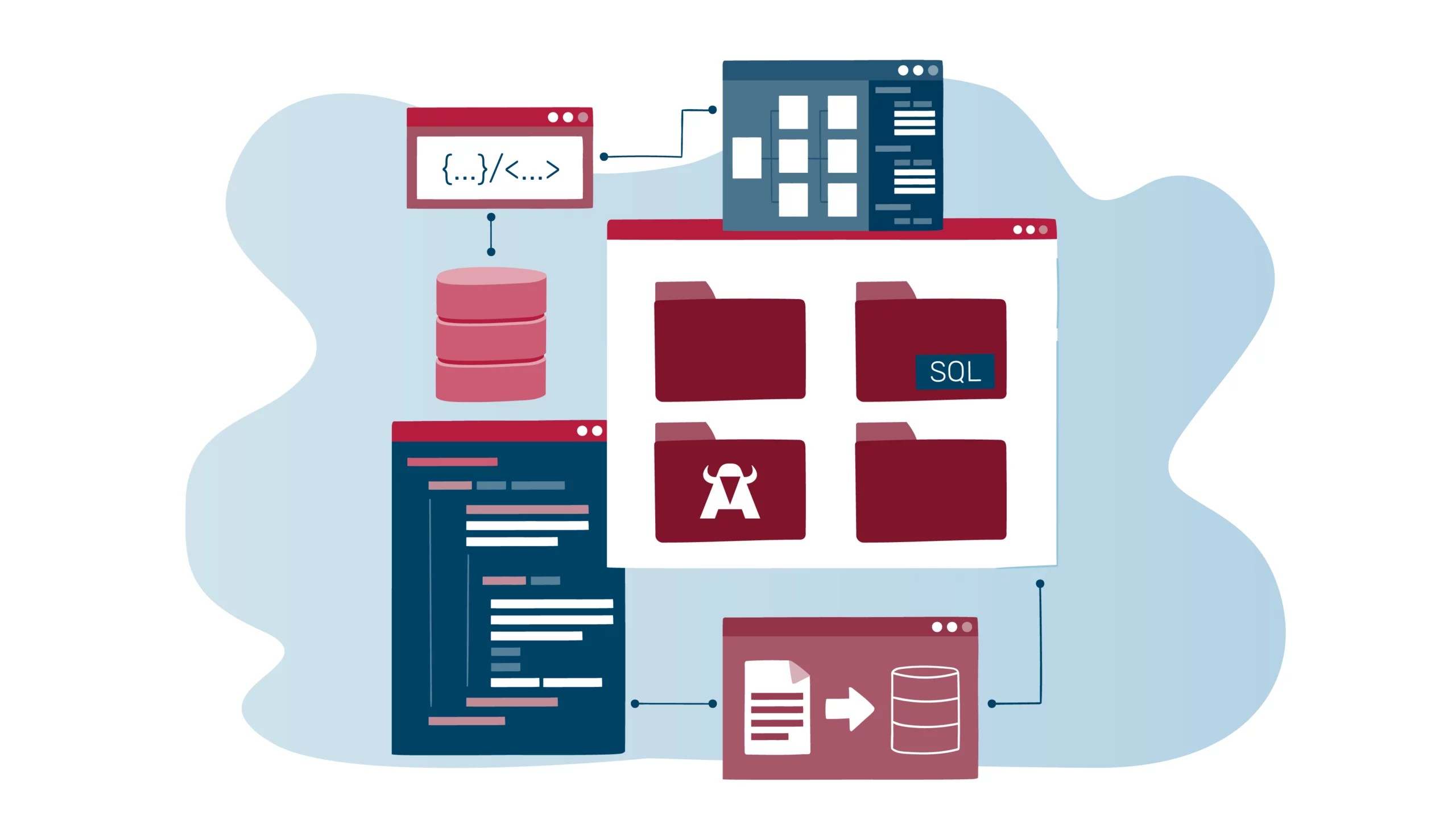
Additionally, CouchDB uses JavaScript (MapReduce) for querying JSON documents. Access is entirely handled via HTTP REST, with every element exposed as a resource with its own URI. This design greatly simplifies integration and cloud deployment.
The HTTP REST API also enables direct integration from a mobile application without the need for a traditional backend layer. In many cases, the application can communicate directly with CouchDB, eliminating the need for an intermediate application server to handle CRUD operations. This simplifies the overall architecture and reduces latency, although it may require handling authentication and authorization directly within CouchDB or through a lightweight proxy.
Naturally, these were not the only aspects we found interesting. There are additional features that, while perhaps not as striking as the architecture and API, are still worth mentioning:
- Simple bidirectional replication, ideal for distributed and offline environments
- Multi-Version Concurrency Control (MVCC), enabling multiple concurrent reads and writes without locking entire files
- Fault-tolerant architecture and eventual consistency, suitable for applications requiring high availability
- A web-based administration interface called Futon, simplifying database management
- ACID compliance, ensuring data integrity — although it does not support complex transactional capabilities in the same way relational databases like MySQL, MariaDB, or PostgreSQL (which we typically use at WATA Factory) do
Conclusion
In summary, at WATA Factory we found that, although this technology may not be the optimal choice for complex analytical queries or write-intensive workloads, its use in mobile applications — where synchronization, fault tolerance, and offline capabilities are key — is particularly compelling.
This allows us to provide our clients with stronger guarantees of integrity and reliability in the mobile applications we develop.