

Angular remains one of the most solid, complete, and relevant frameworks on the market, especially in enterprise environments and large-scale projects.
With version 21 (released at the end of November 2025), Angular introduces several important updates for developers and teams. Among the most notable changes:
In this article, we’ll explain in simple terms what Angular is, and then dive into the advantages this latest version brings compared to previous releases.
What is Angular?
Angular is a web development framework created by Google that enables the building of modern, fast, and scalable applications. It offers a robust architecture, built-in tools (such as routing, forms, services, and testing), and a component-based approach.
It is especially designed for medium and large projects, where code organisation, maintainability, and scalability are essential.

What advantages does Angular 21 bring?
Among the most significant improvements, we find the following:
1. Signal Forms (experimental)
A new signals-based forms API. It allows the form state to be defined as a signal, and Angular automatically synchronises form fields, validation, dirty/touched state, and more.
This greatly simplifies form logic.
2. Angular ARIA: Accessibility and “headless” components
A UI primitives library (accordions, menus, lists, comboboxes, etc.) focused on accessibility, without imposing styles — enabling flexible design with strong ARIA support.
3. Angular MCP Server
Native integration with AI agents, allowing them to interact directly with Angular tooling to generate code, perform analysis, automate tasks, and assist development from day one.
4. New default testing environment
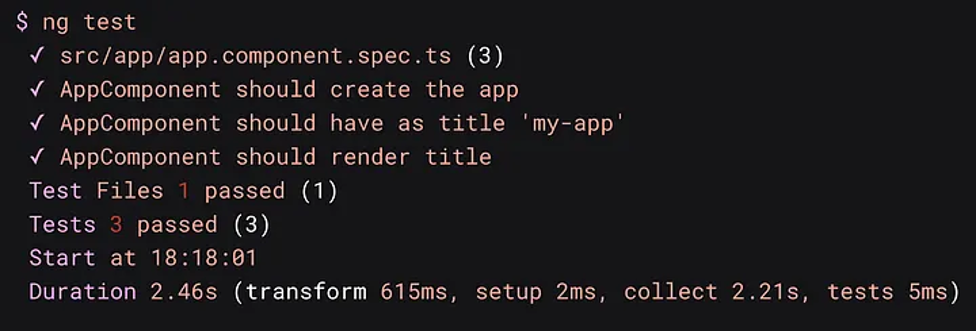
Vitest replaces Karma/Jasmine as the default test runner. This results in faster tests, compatibility with modern APIs, and a lighter, more contemporary testing experience.
5. Reactive change detection
Angular no longer depends on zone.js by default, instead using explicit reactivity via signals. This leads to faster UI updates, lower overhead, smaller bundles, and more efficient execution.
1. Signal Forms: a new era for form management in Angular
Angular introduces Signal Forms in experimental mode, a proposal that completely redefines how forms are handled.
This new API, built on Signals, offers a much more reactive, scalable, and composable experience.
Instead of managing scattered state, manual subscriptions, or complex structures, Signal Forms allow form state, validations, and values to update automatically through declarative signals.
The result is a more intuitive, easier-to-maintain, and far more predictable model — ideal for applications with complex or high-volume forms.
For development teams, this means less code, fewer errors, and faster development speed.
import { form, Field } from '@angular/forms/signals'; @Component({ imports: [Field], template: ` Email: <input [field]="loginForm.email"> Password: <input [field]="loginForm.password"> `})export class LoginForm { login = signal({ email: '', password: '' }); loginForm = form(this.login);}2. Angular Aria: advanced accessibility with “headless” components
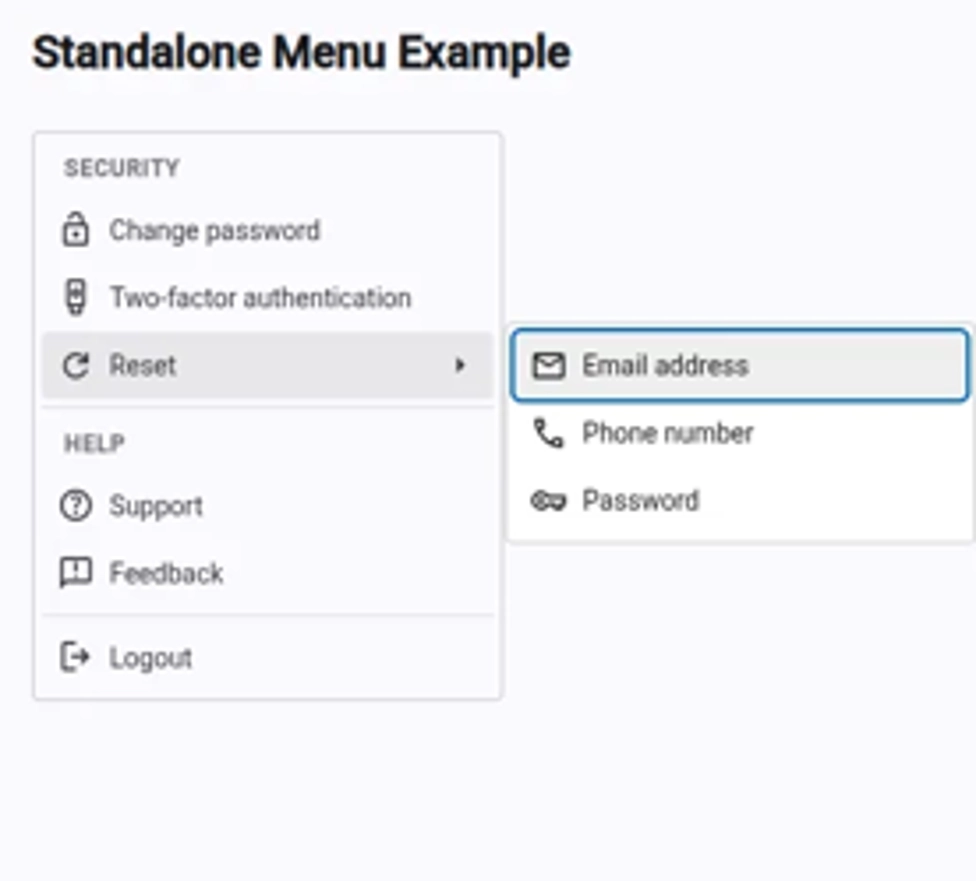
With Angular Aria in Developer Preview, the framework introduces a new set of headless components designed with accessibility as a core principle.
These components — such as menus, lists, and comboboxes — provide full internal logic and ARIA compatibility without enforcing styles or visual structure.
This allows teams to build accessible, robust, and fully customised interfaces without reinventing the wheel for every project.
Angular Aria brings consistency and reliability, especially for products that must meet accessibility regulations or aim to deliver inclusive experiences by design.
3. Angular MCP Server: native integration with AI agents
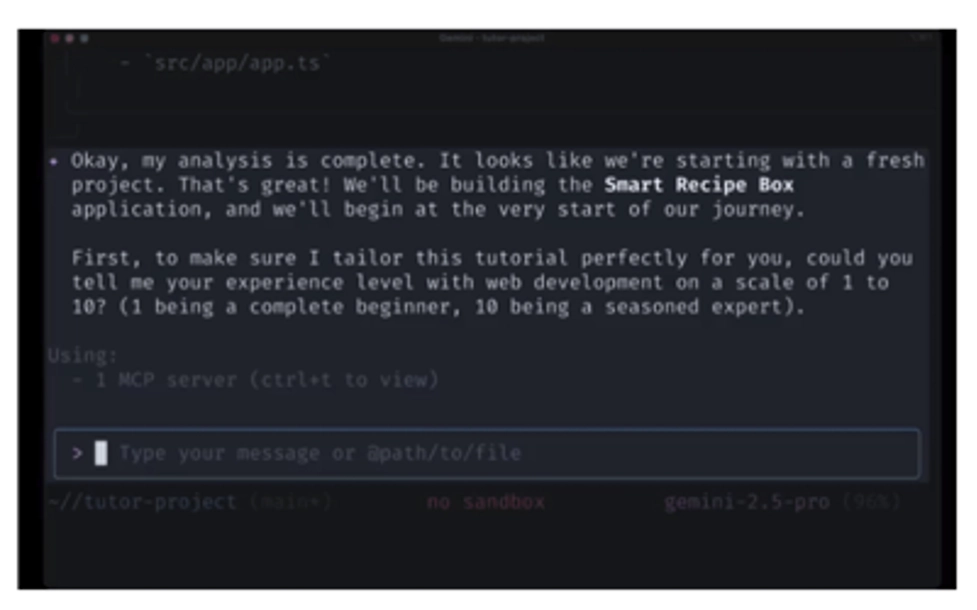
Angular takes a firm step into the future with its MCP Server, which now includes seven stable and experimental tools that allow AI agents — including LLMs — to interact directly with Angular projects.
This opens the door to capabilities such as code generation, refactoring, diagnostics, route analysis, automatic signal integration, or accessibility improvements — all driven by AI-powered tools.
The advantage is clear: teams can accelerate repetitive tasks, receive intelligent assistance from day one, and boost productivity through agents that understand Angular natively.
4. Vitest as the default test runner: speed and modernity
The Angular CLI integrates Vitest as the new default test runner — a long-awaited change within the community.
Vitest provides a modern, fast testing environment compatible with contemporary APIs, replacing the traditional Karma setup.
Key benefits include extremely fast execution, compatibility with modern ecosystem tools, and simplicity when configuring and running unit tests.
For teams, this means a faster feedback loop and a testing experience closer to modern frameworks such as Vite or Jest.
5. Goodbye zone.js in new projects: simpler and more efficient reactivity
With Angular 21, new applications no longer include zone.js by default.
This is one of the most important steps in the framework’s evolution.
Thanks to Signals and the new reactivity system, Angular can now manage UI updates without relying on traditional zone-based change detection.
This results in:
• Better overall performance
• Smaller bundle size
• Less runtime overhead
• A simpler and more predictable mental model
For developers, this means working with a more modern and efficient Angular, reducing long-standing framework complexity.
What benefits does Angular 21 bring to our clients?
For a software company like WATA Factory, adopting Angular 21 translates into real business benefits:
• Reduced development and maintenance costs: less duplicated code, simpler forms, improved state management, and fewer bugs → fewer development hours and lower long-term technical debt.
• Faster delivery speed: easier project setup, faster startup, Vitest testing, and signal-based reactivity enable teams to deliver new features and improvements more quickly.
• More optimised frontend products: lighter bundles and improved performance — ideal for clients who need efficient, fast applications with strong SEO and accessibility. This can directly improve end-user satisfaction.
• Guaranteed scalability and technological evolution: using the latest Angular version ensures the technical foundation is future-ready, reducing migration costs and increasing long-term sustainability.
• Better work organisation and code quality: modern default testing tools, more predictable architecture, and built-in best practices allow WATA Factory to maintain high standards across multiple projects and teams.
At WATA Factory, we review every new Angular release because we believe this framework provides a solid, modern, and highly productive foundation for our daily work.
Staying up to date allows us to take advantage of continuous improvements in performance, security, and efficiency, ensuring our solutions remain competitive and aligned with industry best practices.
When does it make sense to migrate to Angular 21?
Migrating to Angular 21 makes sense when a project aims to improve performance, simplify its architecture, and adopt new capabilities centred around modern reactivity, testing, and optimisation.
If an application is already on a recent version (Angular 15+), the migration is usually smooth and allows teams to benefit from key improvements such as signals, zone.js-free change detection, the new forms system, and Vitest-based testing.
Migration is also recommended when a team wants to reduce technical debt, speed up development, or align the project with current framework best practices.
For long-lived, critical applications with an active roadmap, migrating to Angular 21 ensures sustainability, future compatibility, and continued access to performance and security updates.
For very old or unmaintained projects, it may be more appropriate to plan a phased migration or even evaluate a partial rewrite to avoid large version jumps.
Conclusion
Angular 21 represents a renewed momentum for the framework: it combines technical modernisation, improved performance, a better developer experience, and stronger support for building maintainable and accessible applications.
For a development company like WATA Factory, this is a clear opportunity.
Adopting Angular 21 can translate into higher efficiency, better quality, faster delivery, and more sustainable code. In many cases, it represents a qualitative and competitive leap compared to older versions.
At WATA Factory, we evaluate every Angular release because we believe the framework brings significant value to our day-to-day projects.
Its robustness, structured approach, and scalability allow us to build more reliable, maintainable, and efficient solutions. Staying up to date with its evolution helps us deliver better results to our clients and ensures our applications are built on a modern, solid technological foundation.